
Books about feelings for children
Stories give children words for the feelings they cannot yet explain. These books help little ones name worry, anger, loneliness and joy.
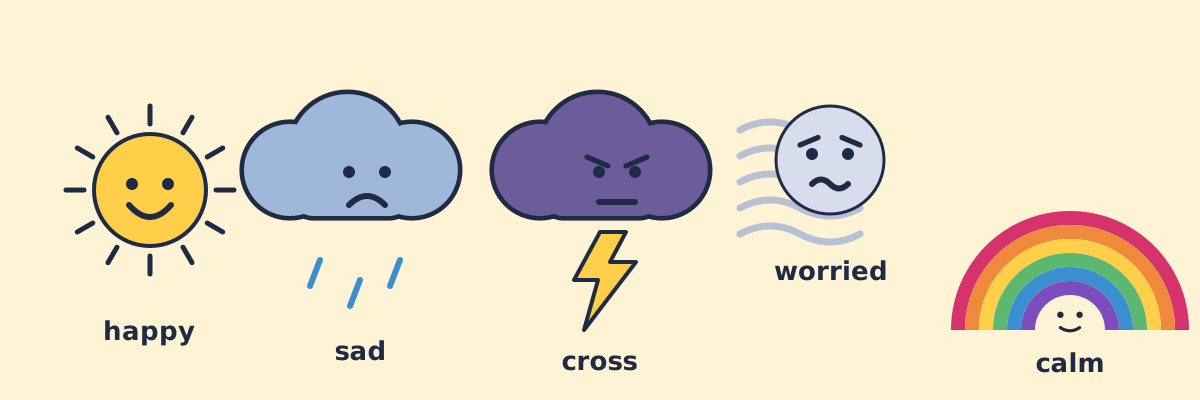
Children feel things very big and very fast, and they often do not yet have the words for them. A story can give them those words. When a character is afraid, grumpy or lonely, a child can see how that feels from a safe distance, and learn that they are not the only one.
Books do not replace conversation, but they open it. “Have you ever felt like that?” is easier to ask when you are both looking at a picture.
How to talk about feelings through books
- Pause on the picture. Ask “How do you think she feels?” and let your child tell you.
- Name the feeling. “He looks frustrated,” gives children a word they can use later.
- Share your own. “I felt nervous on my first day, too,” shows that feelings are normal.
- Skip the lesson. Resist turning every book into a moral. Enjoying the story comes first.
Books to try
The Colour Monster
By Anna Llenas
A monster’s feelings are all mixed up until a little girl sorts them into jars by colour. A simple way to learn the words for joy, sadness, anger, fear and calm.
The Huge Bag of Worries
By Virginia Ironside, illustrated by Frank Rodgers
Jenny cannot get rid of her worries until a neighbour suggests talking about them. A reassuring book for anxious children.
Wemberly Worried
By Kevin Henkes
A little mouse worries about everything, and especially about starting school. A gentle story that shows worry can be eased by a friend.
The Invisible String
By Patrice Karst
A mother explains that people who love each other are always connected by an invisible string. Often used to help with separation, such as the first days at school.
The Kissing Hand
By Audrey Penn
A young raccoon is nervous about school, and his mother gives him a kiss on the palm to carry with him. Ideal before a big change.
When Sophie Gets Angry — Really, Really Angry…
By Molly Bang
Sophie loses her temper, runs out to the woods and finds her way back. A bold and honest look at how anger feels, and how to calm down.
Ruby’s Worry
By Tom Percival
Ruby has a worry that follows her everywhere, until she shares it with someone else. A thoughtful story about anxiety.
The Rabbit Listened
By Cori Doerrfeld
When Taylor’s block tower is knocked down, a string of animals offer advice, but it is the rabbit, who simply listens, who helps. A lovely book about empathy.
Starting School
By Janet and Allan Ahlberg
A warm, funny look at the first weeks of school, packed with detail in the illustrations. Perfect before the first day.
When to get extra help
Books are a helpful tool, but if your child’s worries seem to be stopping them from sleeping, eating, going to school or enjoying things they used to love, it is worth talking to your GP, your child’s teacher or a school counsellor. Reading about feelings is a good start, and it works best alongside support from people who know your child.
Frequently asked questions
Which books can help a child who is anxious about school?
Try Wemberly Worried, The Kissing Hand and Starting School. Visiting the school, talking about what will happen and reading stories together all help.
How do I explain big emotions to a toddler?
Keep it simple. Use short, clear words such as “happy”, “sad” and “cross”, and show feelings in pictures. The Colour Monster is a popular choice for this age.
Should I read books about difficult topics, such as loss?
Yes, when your child is ready. Books can open a conversation and help children feel less alone. Read the book first so you know what is coming, and let your child lead the discussion.
What if my child does not want to talk about the book?
That is fine. Some children think about a story long after it is over. Let them know you are there if they want to talk.